
Discover Narsinghgarh, the ‘Kashmir of Malwa’. Explore the massive Fort, ancient temples, and Stree movie locations in this hidden MP gem.
Table of Contents
🗺️ Key Takeaways
Famous For: The majestic Narsinghgarh Fort (3rd largest in MP), ancient temples, and natural beauty.
Pop Culture: A primary filming location for the Bollywood blockbuster Stree and various South Indian films.
Best Time to Visit: Monsoon (for the greenery) or Winter.
Ideal Trip Duration: 3–4 Days.
Introduction: Why Narsinghgarh Should Be Your Next Stop
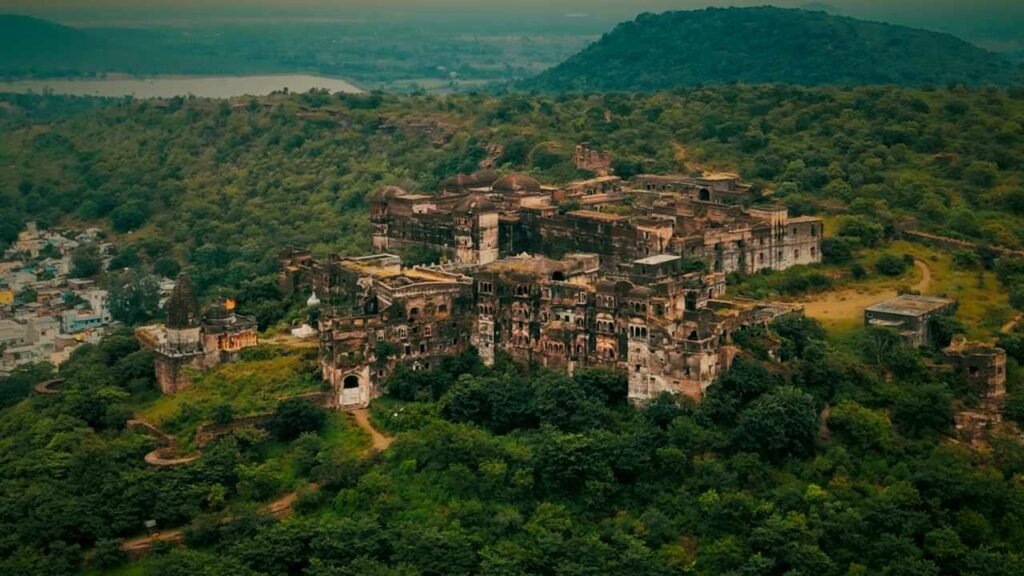
When travelers think of magnificent forts in India, the royal palaces of Rajasthan and the rugged hill forts of Maharashtra often dominate the conversation. However, Madhya Pradesh ranks a close third in heritage density, offering sites that are just as grandiose but far less crowded. Hidden within the Rajgarh district lies a treasure that rivals them all: Narsinghgarh.
Founded in 1681 by Shri Dewan Parasram Ji and named after his family deity, Lord Narsingh (an avatar of Vishnu), this town is a fascinating blend of history and nature. It is often affectionately called the “Kashmir of Malwa” due to its unique geography. Situated on the Malwa plateau, the town is cradled by mist-covered hills and abundant lakes that transform into a verdant paradise during the rains, strikingly reminiscent of the valleys of Kashmir.
Whether you are a history buff eager to explore centuries-old architecture, a spiritual seeker tracing ancient pilgrimage routes, or a film enthusiast looking for the real-life eerie locations of the movie Stree, Narsinghgarh offers a travel experience that is raw, authentic, and awe-inspiring. Unlike commercialized tourist hubs, this town retains an old-world charm where stories of the past seem to linger in the air.
Narsinghgarh Fort: The Crown of the Hill
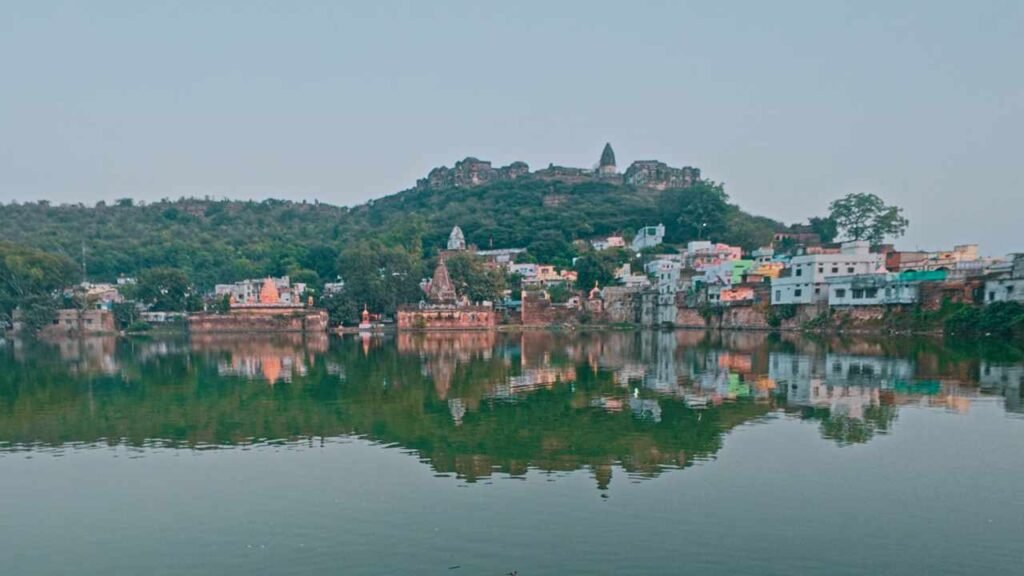
Perched atop a 350-foot hill, Narsinghgarh Fort is the undeniable centerpiece of the region, commanding respect from every angle. Its strategic position offers a unique visual spectacle; from a distance, the fort’s silhouette resembles a king seated majestically on a throne, wearing a crown of battlements. As the third-largest fort in Madhya Pradesh, it is a massive structure that demands time to explore, far more than a quick walkthrough can provide.
The architecture is a stunning fusion of Rajput, Malwa, and Rajasthani styles, creating a visual language that speaks of cultural exchange and martial prowess. This grandeur is evident in its staggering statistics: 304 interconnected rooms, four grand halls designed for royal audiences, 12 sprawling courtyards, and 64 verandas that offer panoramic views of the town below. The sheer scale of the palace creates a labyrinth of history where every corner whispers a different story of the Narsinghgarh State.
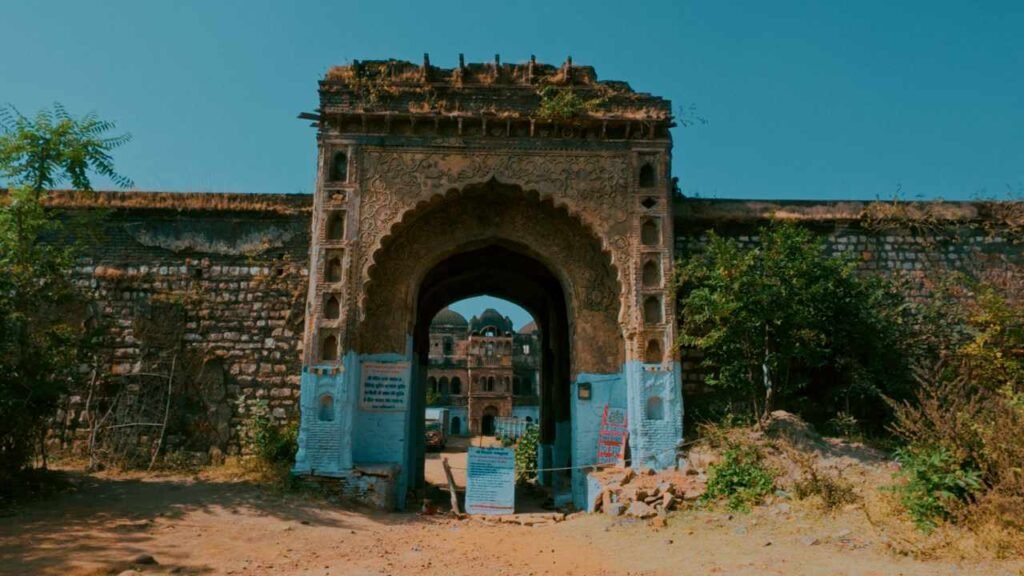
Beyond its historical significance, the fort has found modern fame as a preferred destination for filmmakers seeking authentic, untouched locations. Its atmospheric corridors, with their peeling plaster and imposing stone arches, were featured heavily in the Bollywood horror-comedy hit Stree, providing the perfect backdrop for the film’s spooky narrative. It is also a favorite for South Indian films and web series, drawn by its preserved heritage look. Visitors can often spot production vans and film crews setting up for shoots, creating a fascinating contrast between ancient stone and modern cinema technology. The fort also offers a breathtaking aerial view of the Jal Mandir and Parasram Lake below, making it a photographer’s paradise. It is highly recommended to set aside a full day to navigate its labyrinthine passages and soak in the cinematic history.
Kakshila Mata Temple
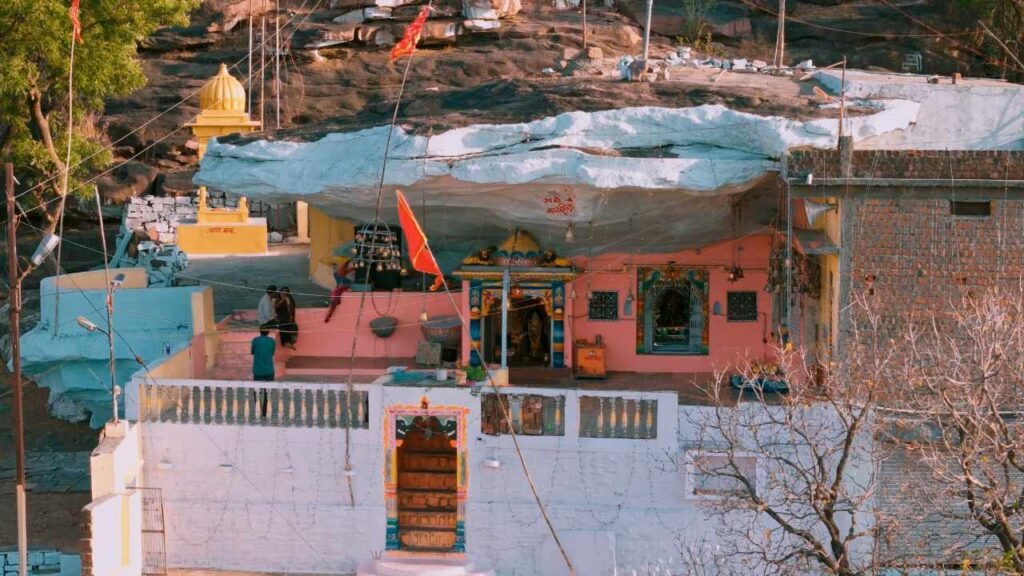
The journey to Kakshila Mata Temple begins near the Narsinghgarh bus stand, where a local playground serves as a rustic parking area. From here, a flight of stone stairs leads you up the hill to the shrine, offering a gradual transition from the bustling town life to the quietude of the divine. The climb is moderate, suitable for most fitness levels, though elderly travelers are advised to pace themselves and carry water to stay hydrated. The best time to make this ascent is during the winter months when the crisp air makes the trek refreshing rather than exhausting.
Upon reaching the top, you are greeted by a serene courtyard that feels miles away from civilization. The silence here is profound, broken only by the wind or the ringing of temple bells. The peaceful atmosphere here sets the spiritual tone for the rest of the circuit, encouraging visitors to slow down and reflect.
Karni Mata Temple (The Hidden Gem)
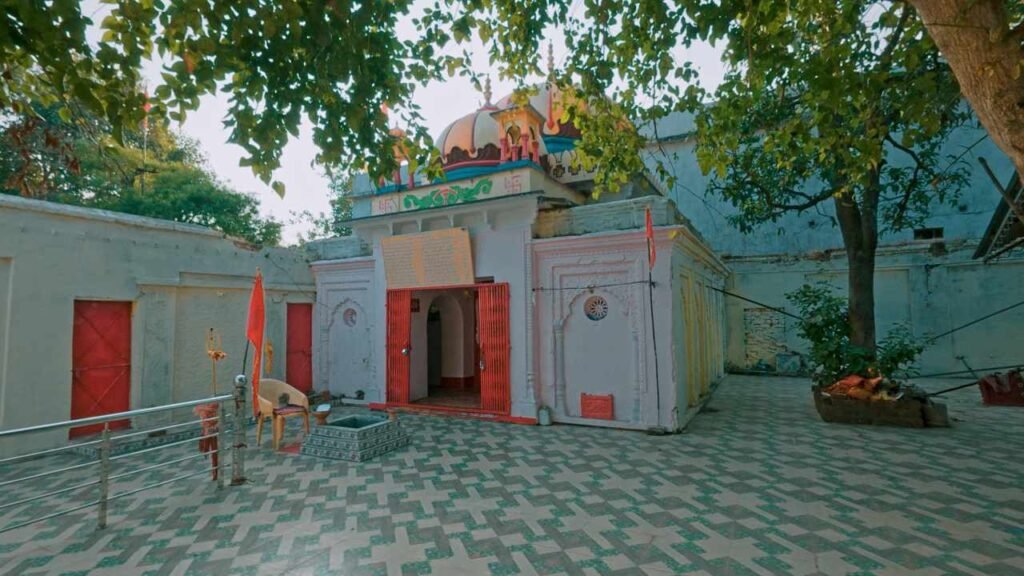
This temple holds a distinction that surprises almost every visitor and serves as a major point of intrigue: it is said to be one of only two dedicated Karni Mata temples in the world, the other being the world-famous Deshnok temple in Rajasthan known for its rats. Built by Maharaja Vikram Singh in 1940, this site remains a relatively unknown secret to the outside world, cherished deeply by the local Hindu community, who maintain its sanctity.
Karni Mata is revered as the warrior goddess, a fierce protector of the brave men and women who safeguard the land. The temple exudes an aura of strength, valor, and history. Unlike the commercialized temples found elsewhere, this shrine feels intimate and potent. Discovering this spot feels like unearthing a secret chapter of Indian heritage, as very few tourists are aware of its existence or its significant link to the lineage of the Ranas and warriors of the region. Standing here, one can almost feel the reverence of the soldiers who have bowed their heads at this very spot for decades.
Chota Mahadev Temple
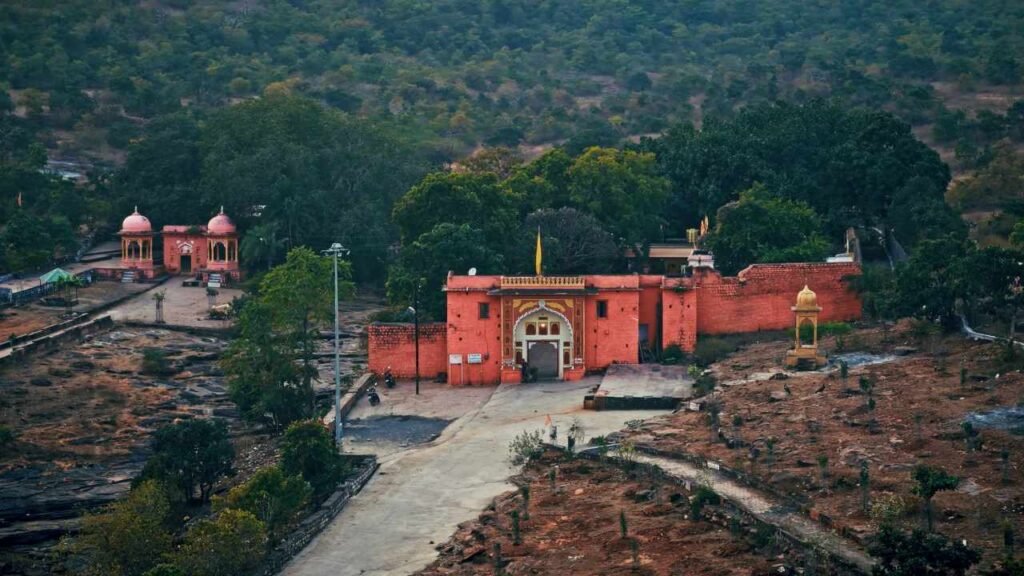
Visiting Chota Mahadev during the rainy season feels less like a pilgrimage and more like a trip to a lush hill station. The monsoon transforms the surrounding foliage into a vibrant emerald canopy, and the air becomes thick with the scent of wet earth. The temple features a small, sacred pond filled with water from natural mountain springs. Locals believe this water possesses Ayurvedic and medicinal properties, drawn from the roots of the medicinal herbs growing on the hillside.
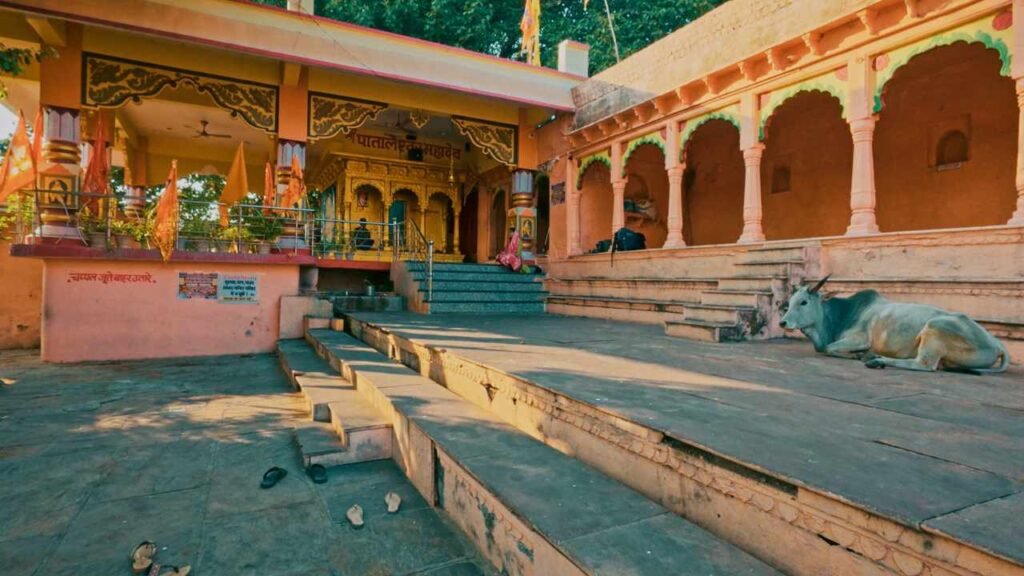
The temple is also a vibrant hub for community service and compassion, housing a shelter for cows (Gaushala) where they are regularly cared for. It is common to find a Bhandara (community meal) taking place here, where visitors are warmly invited to partake in the simple, sanctified food. The atmosphere is incredibly peaceful, urging travelers to pause and absorb the tranquility. It’s a place where the barrier between nature and divinity dissolves, offering a retreat for the soul.
Hinglaj Mata Temple
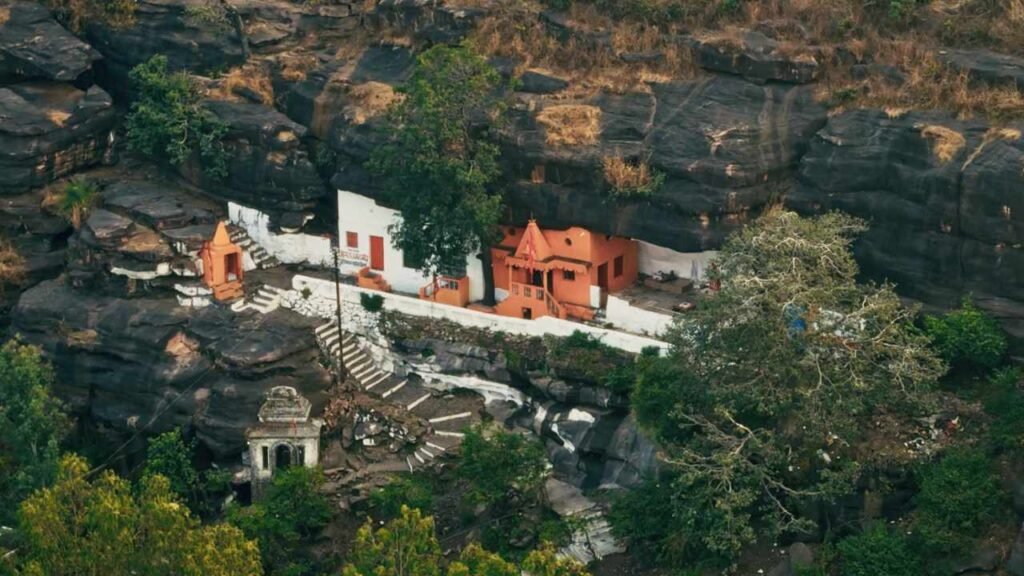
Locally renowned as the “World’s Third Hinglaj Mata Temple,” this shrine is situated high on a hill, built directly into the rugged mountain terrain. The traditional route involves a steep, testing climb up a long flight of stairs. As you ascend, you are spiritually guarded by idols of Lord Ganesha and Bajrangbali Hanuman, markers that encourage pilgrims to keep moving forward despite the physical effort.
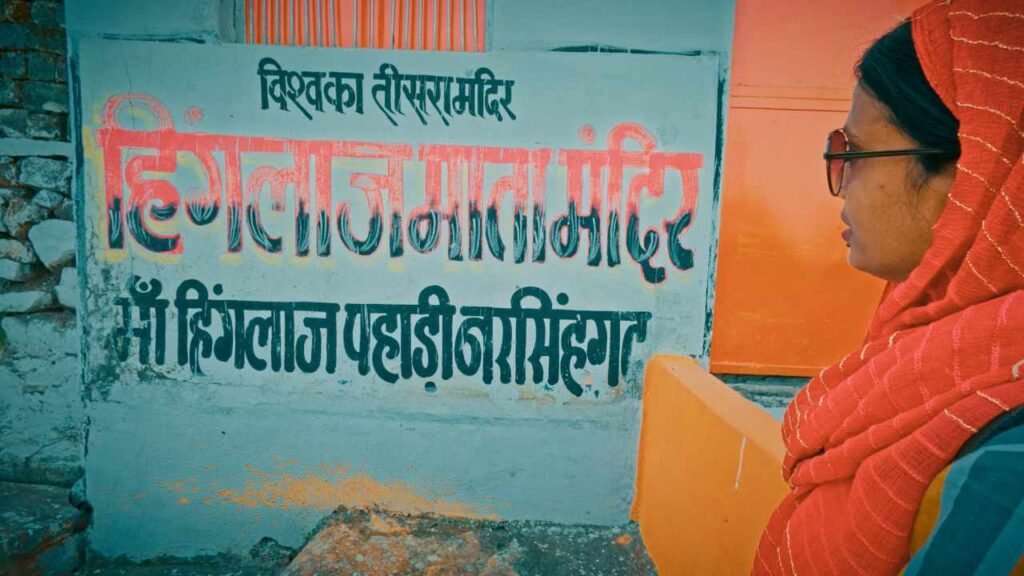
However, there is an “insider” way to reach the top that transforms the pilgrimage into an adventure. As you can see in the image above, the Hindi text says, “The Third Temple in the World.” Hinglaj Mata Temple. When we arrived at the temple, the doors were locked, but before we could climb the stairs, people nearby told us that the priest lived in a room there. We called him and expressed our desire to visit Hinglaj Mata in the temple, and he opened the doors. After visiting the goddess and receiving blessings from Hinglaj Mata and the priest, we were discussing our next destination when he told us that there was a route from here that would take us faster and save us from climbing so many stairs to the temple.
So, we followed the priest’s advice.
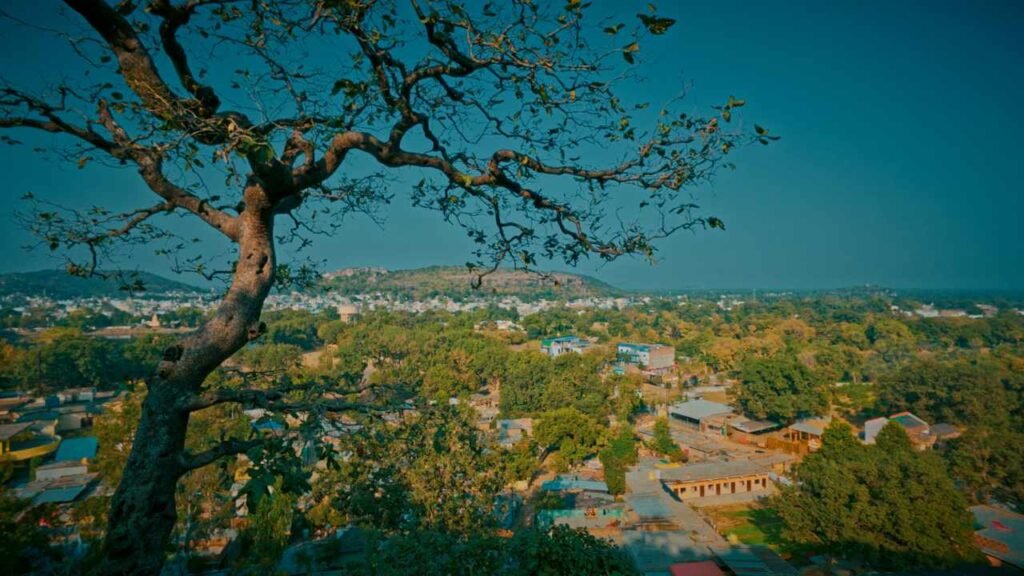
The priest explained this route to us very well, as it offers a full view of Narsinghgarh, and we also enjoyed a bit of trekking.
We were thinking about how beautiful it would be during the rainy season and planned to visit again during the monsoon season. We will show you the beauty of this town even during the rainy season.
Bada Mahadev Temple (Baijnath Dham)
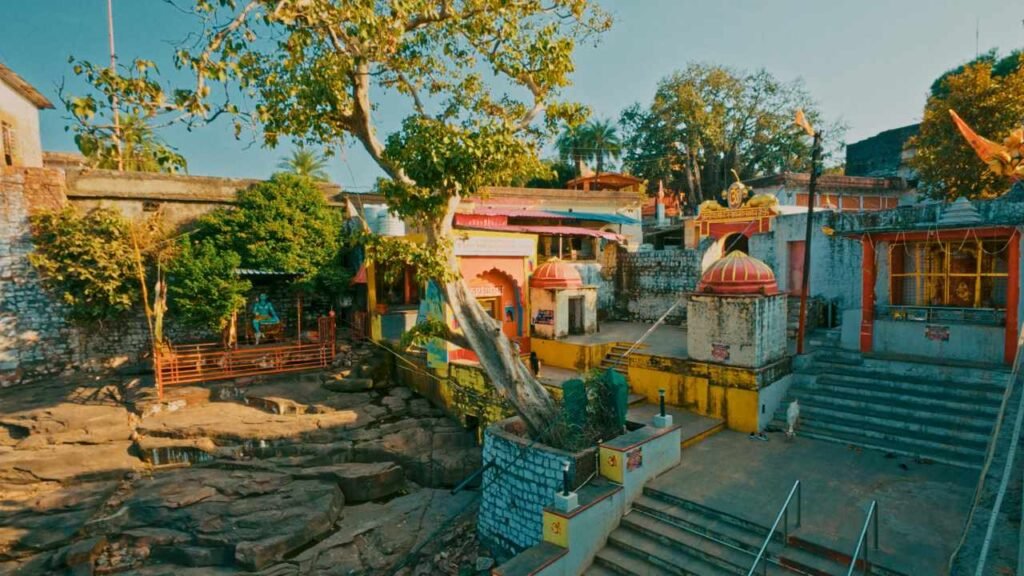
Also known as Baijnath Dham, this extensive temple complex is a major spiritual anchor for the region. Upon entering, visitors are welcomed by a dedicated area for cows, reinforcing the cultural importance of animal welfare in the area. The complex is designed as a spiritual journey, housing a sequence of shrines; devotees typically pay respects to Lord Rama and Goddess Sita first, followed by Lord Hanuman and Mother Ganga, before reaching the main Shiva temple at the summit.
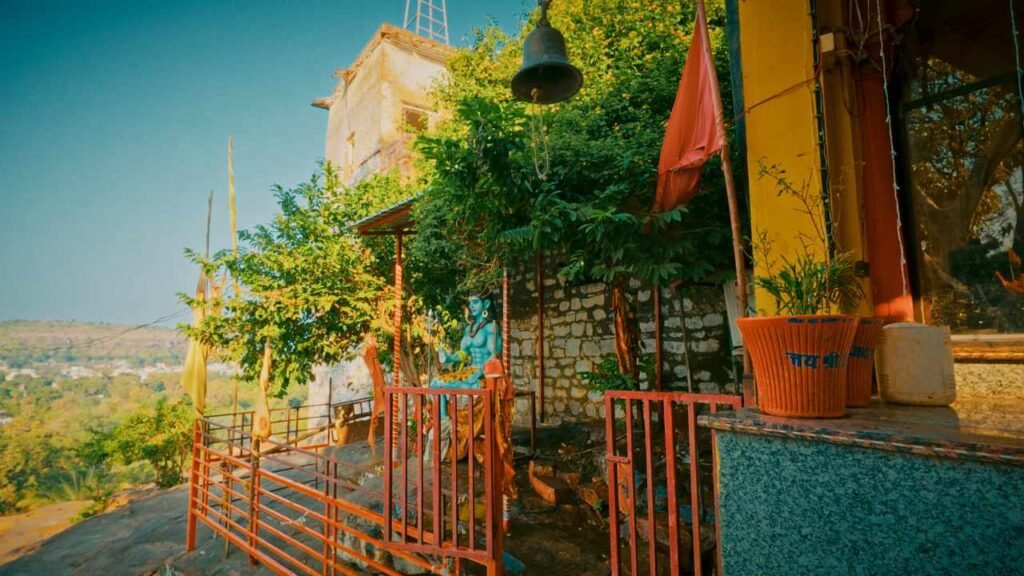
A fascinating and unexplained natural phenomenon occurs here: water flows continuously from cracks in the mountain rocks throughout the year, even during the scorching, dry summer months when other sources run dry. This water is considered sacred and medicinal by the locals. The climb to the main Shiva temple reveals a small ashram-like setting where sadhus maintain the sanctity of the place, often deep in meditation. On the descent, you are treated to a magnificent view of a large, blue statue of Lord Mahadev, which stands as a serene guardian over the landscape, creating a powerful visual memory for all who visit.
Pashupatinath Temple (Jal Mandir)
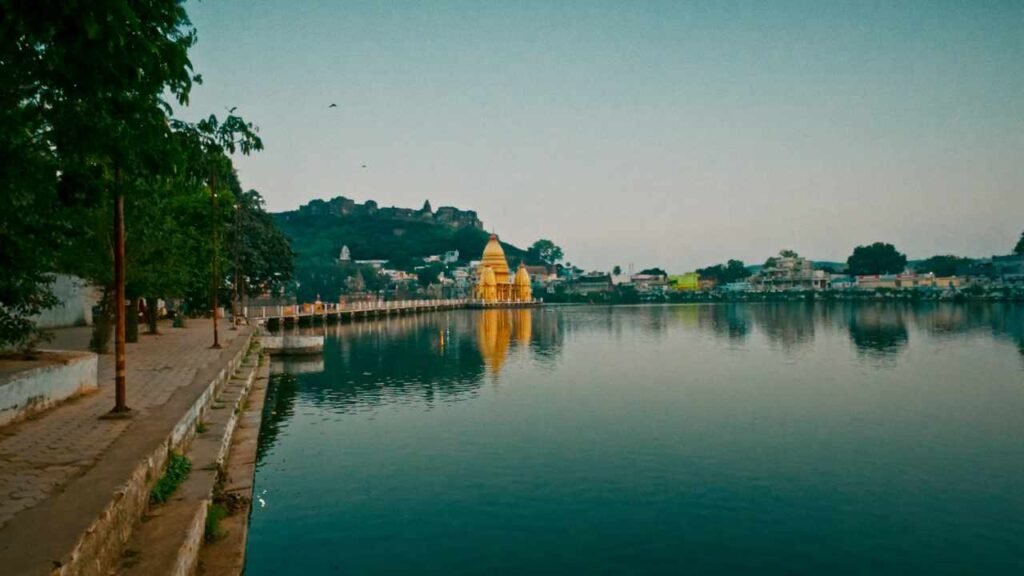
Located squarely in the middle of Parasram Lake, the Pashupatinath Temple, widely known as Jal Mandir (Water Temple), is visually spectacular. Accessible by a narrow causeway that makes you feel as though you are walking on water, the temple houses a rare five-faced (Panchmukhi) Shivalinga. The location is at its most magical during sunset when the fading golden light reflects off the water, creating a perfect mirror image of the temple structure.
The ecosystem here is thriving; the lake surrounding the temple is teeming with fish. Feeding them is considered a virtuous act (punya) by locals, and you will often see families scattering puffed rice into the water. It is a place of absolute calm, where the only sounds are the gentle lapping of water against the temple plinth and the distant chiming of bells. It serves as a perfect spot to unwind and reflect after a long day of trekking through the hills, offering a meditative end to the day’s adventures.
Gadhi Sarkar Hanuman Temple
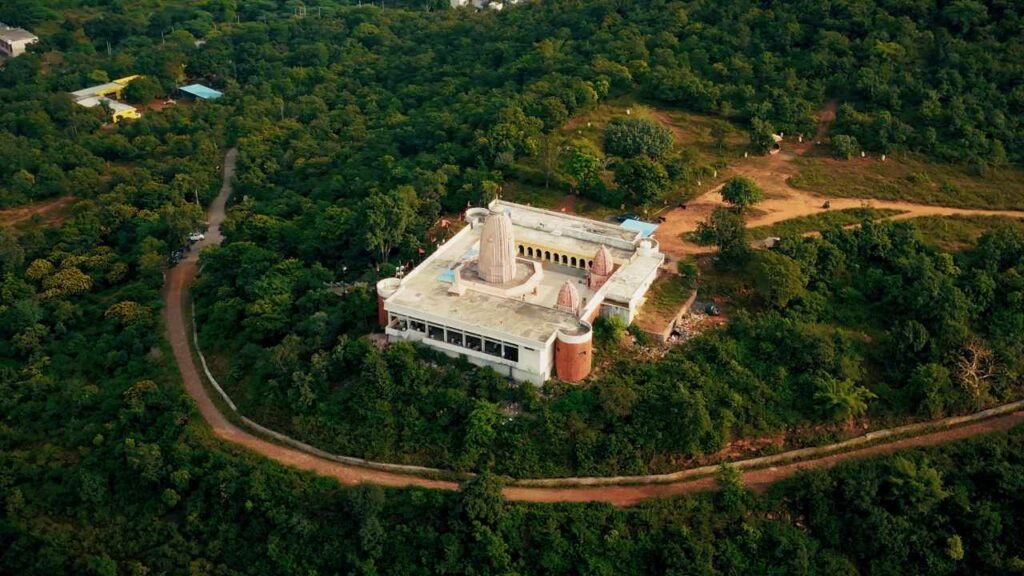
The final stop on the Narsinghgarh circuit is the Gadhi Sarkar Hanuman Temple. Situated on a hill, this temple is accessible by both foot and car, making it easy for travelers of all ages to visit. The temple has recently undergone renovation to restore its structure and improve facilities for the growing number of pilgrims who visit to seek the blessings of Lord Hanuman.
The drive or walk up to Gadhi Sarkar is particularly enchanting during the monsoon season. The surrounding hills are carpeted in lush green grass, and clouds often descend low enough to touch the peaks, validating the town’s nickname. The cool breeze and the panoramic vantage point make it a fitting conclusion to the trip. From here, you can look out over the “Kashmir of Malwa” one last time, tracing the path of the places you visited, before heading home with a heart full of memories.
🗺️ Practical Travel Guide
Best Time to Visit
Monsoon (July – September): This is the peak season for nature lovers. To witness why it is called the “Kashmir of Malwa,” you must visit when the rains have washed the dust away, the hills turn a vibrant green, and the lakes are brimming with water.
Winter (October – February): This is the most comfortable time for physical activity. The weather is cool and pleasant, ideal for climbing the hundreds of stairs at the forts and temples without exhaustion.
How to Reach
Narsinghgarh is a Tehsil in the Rajgarh district and is surprisingly accessible despite its “hidden” status.
By Road: It is well-connected by maintained roads from major cities like Bhopal and Indore. The drive itself offers scenic views of the Madhya Pradesh countryside.
By Train: The nearest major railway hubs are in Bhopal or Indore. From there, you can hire a private taxi or take a state transport bus to reach Narsinghgarh comfortably.
Accommodation & Logistics
Duration: To cover the massive Fort and all 8 major spiritual sites without rushing, a 3 to 4-day trip is highly recommended. This allows you to soak in the atmosphere rather than just ticking boxes.
Essentials: Wear sturdy, comfortable walking shoes as the terrain is hilly and uneven. Many temples require climbing steep stairs. Carry sufficient water and dry snacks, as some spots are secluded and shops may not be immediately available.
Final Thoughts
Narsinghgarh is more than just a dot on the map of Madhya Pradesh. It is a living museum where history breathes through the walls of a 300-year-old fort and spirituality flows through mountain springs. It offers a rare glimpse into an India that is timeless, unhurried, and deeply connected to its roots.
If you are looking for an offbeat destination that offers trekking, history, and divine peace without the crowds of commercial tourist spots, pack your bags for the Kashmir of Malwa.
Have you visited any of these hidden forts in MP? Let us know in the comments below!
Explore Beyond Narsinghgarh
Want to extend your trip? Just a short distance away lies the magnificent Sanka Shyam Ji Temple, a hidden architectural marvel in the Rajgarh district.
👉 Click here to read our full guide on Places to Visit Near Narsinghgarh: Sanka Shyam Ji Temple
🎥 Watch the Journey Unfold
Words can only describe so much. To truly experience the mist rolling over the Narsinghgarh Fort and the serenity of the Jal Mandir, you have to see it in motion.
Watch our full travel documentary on YouTube to see the hidden trekking paths and the stunning monsoon views we captured:
If you enjoyed this guide, please Like, Share, and Subscribe to the [Sapna Sharma Films] channel. We are on a mission to uncover India’s most beautiful, hidden gems, and your support helps us take you along on our next adventure.
Let’s go together on our next trip!
For more visual tours of India’s hidden gems, don’t forget to subscribe to Sapna Sharma Films.
Tags: #Narsinghgarh #MadhyaPradeshTourism #HiddenGemsIndia #StreeMovieLocation #MalwaPlateau #IndianForts #TravelGuide