
Bolai Hanuman Temple: Discover the mystery of Siddhaveer Hanuman Temple in Bolai, where trains reportedly slow down on their own. Join us as we also explore the serene Hatkeshwar Dham in Semli.
Table of Contents
Key Takeaways
- The Mystery: Siddhaveer Hanuman Temple in Bolai, where train drivers instinctively slow down due to a local legend, defying standard railway protocols and modern engineering logic.
- The Rarity: Home to “Aadyant Prabhu”—a rare combined idol of Lord Ganesha and Hanuman (one of only three in the world), symbolizing the complete cycle of life from initiation to conclusion.
- The Serenity: Hatkeshwar Dham in Semli, a spiritual complex known for its “talking walls” inscribed with moral teachings and a massive Gaushala dedicated to selfless service.
- Location: Shajapur District, Madhya Pradesh (approx. 120km from Bhopal), nestled in the heart of the Malwa plateau, offering a scenic escape from city life.
A Journey into the Unexplained: Bolai Hanuman Temple
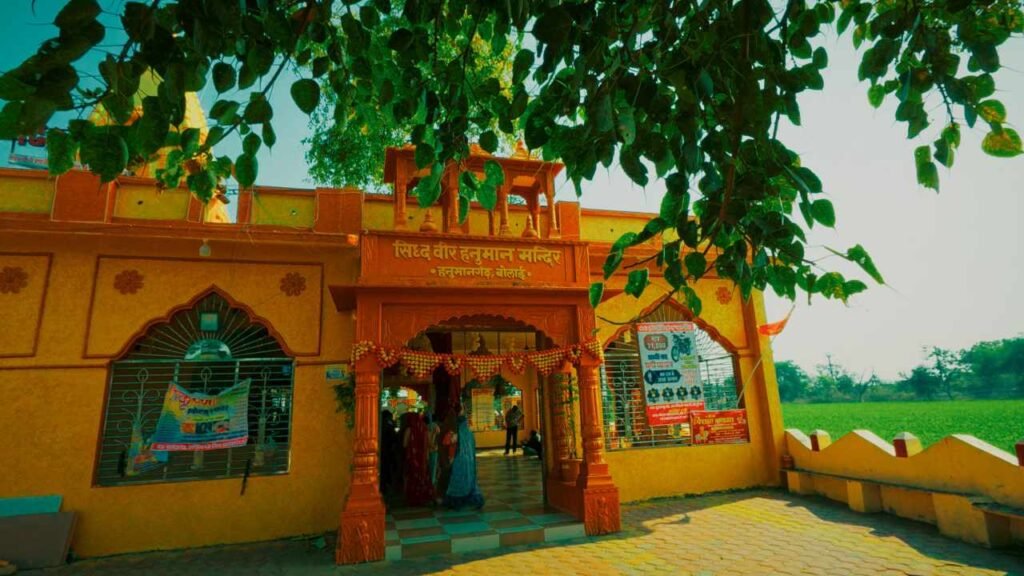
India is a land of complexities, where the firm lines of science and the flowing waves of spirituality often intersect in unearthly ways. This creates a web of stories that defy logic, yet command respect from both believers and skeptics. This is a place where folktales aren’t just bedtime stories. Today, I’m taking you to a temple whose story is so amazing that even the massive, roaring machinery of the Indian Railways slows down before it.
Imagine a train speeding down the tracks, a symbol of modern engineering, industrial power, and relentless speed. Now, imagine that same steel vehicle slowing down as it approaches a special divine place. This is an event where the hectic schedule of the world pauses to acknowledge the ever-present power of the spiritual world.
Welcome to my other spiritual journey. Today, we’ll explore the miraculous Siddhaveer Hanuman Temple in Bolai, a place where faith slows even the train, and the secluded, serene setting of Hatkeshwar Dham in Semli, a place that soothes the soul. Join us as we peel back layers of history and mystery to uncover the stories that make these hidden gems of Madhya Pradesh truly unique.
A Morning in Malwa: Samosas & Scenery
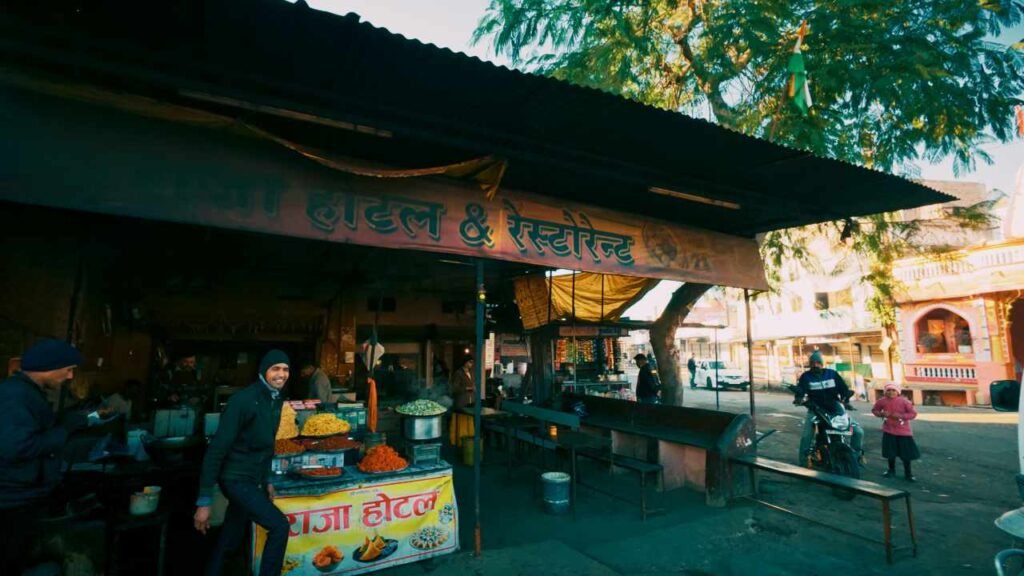
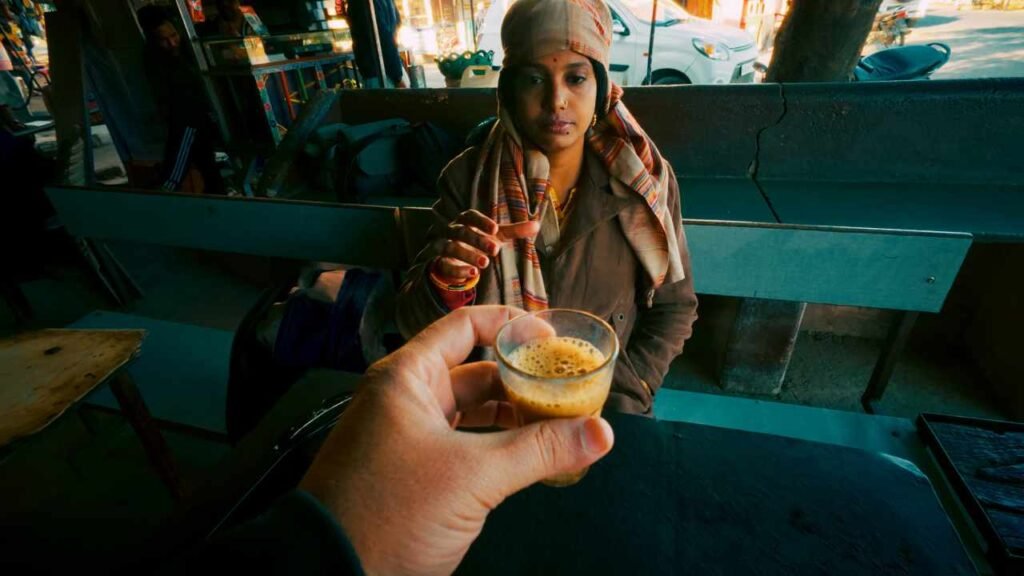

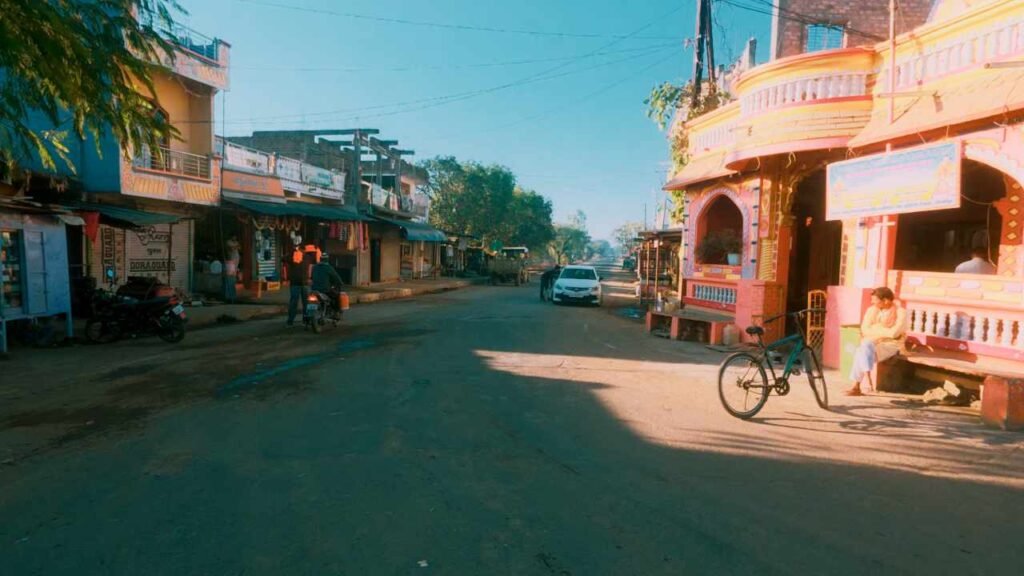
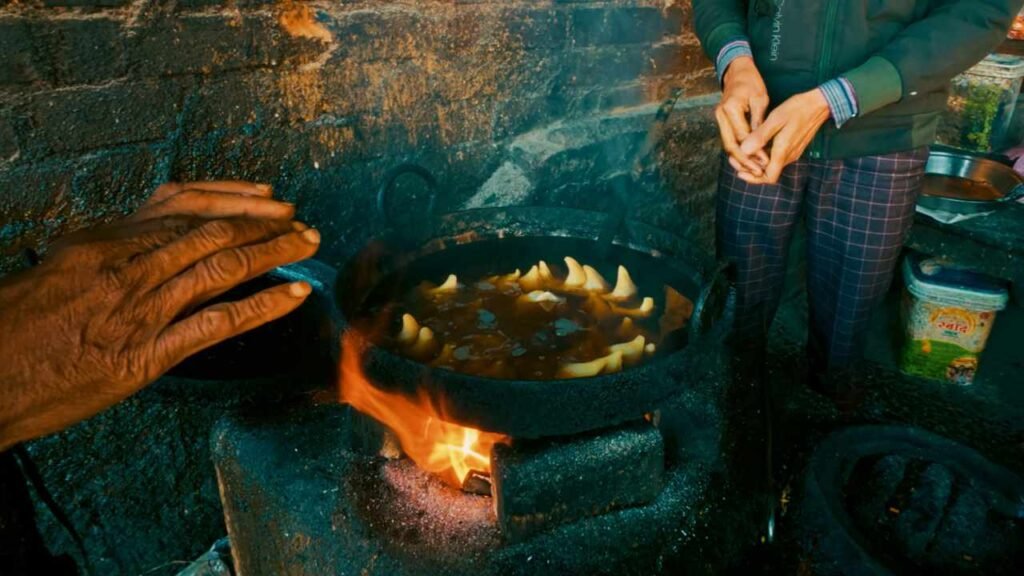
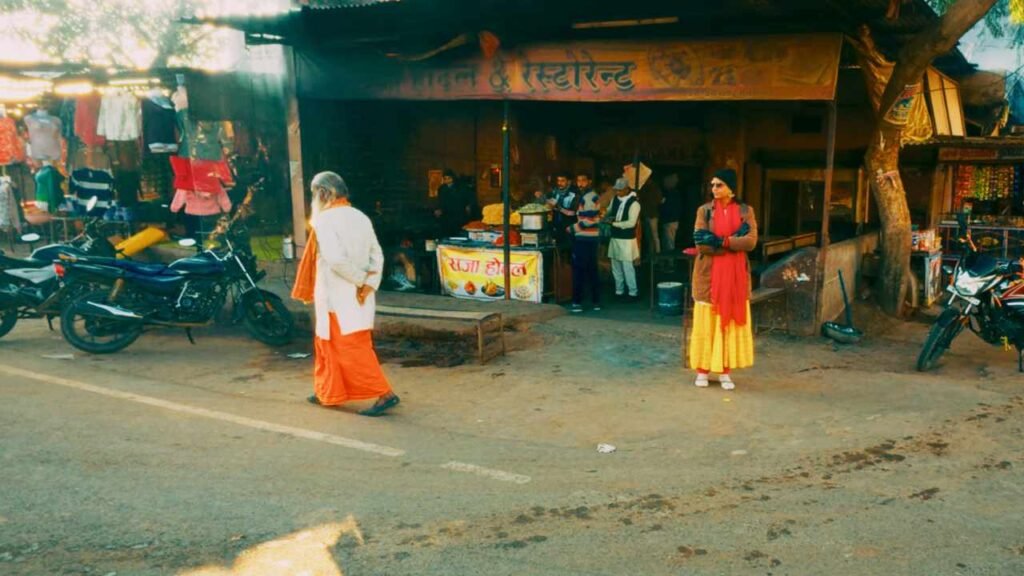
Our journey began in Salaslai, a small, quaint village in the Gulana tehsil of Shajapur district. There’s something unique and lovely about winter mornings in the Malwa region of Madhya Pradesh, an atmosphere that seems frozen in time. As we waited, the village lived slowly, rhythmically. The villagers went about their daily chores. The strong, nostalgic scent of wood smoke from the morning fire, combined with the cool, fresh air, transported us to the raw, rural beauty of India.
We stopped outside a local restaurant, shivering slightly in the pleasant cold, waiting for the fuel for that typical Indian road trip: hot, crispy samosas and steaming cups of tea. The anticipation was as enjoyable as the food itself. Watching the steam rising from the fresh tea cups swirling in the cool air as the village around us woke up was the perfect start to the day.
Must-see: From here, we traveled 8 km to Gulana to capture some stunning drone shots that showcase the sprawling beauty of the landscape. The aerial view reveals a patchwork of farmlands and winding roads, making this area a delightful driving experience. You can watch that iconic cinematic scene here:
Siddhaveer Hanuman Temple: The Guardian of the Railway Tracks
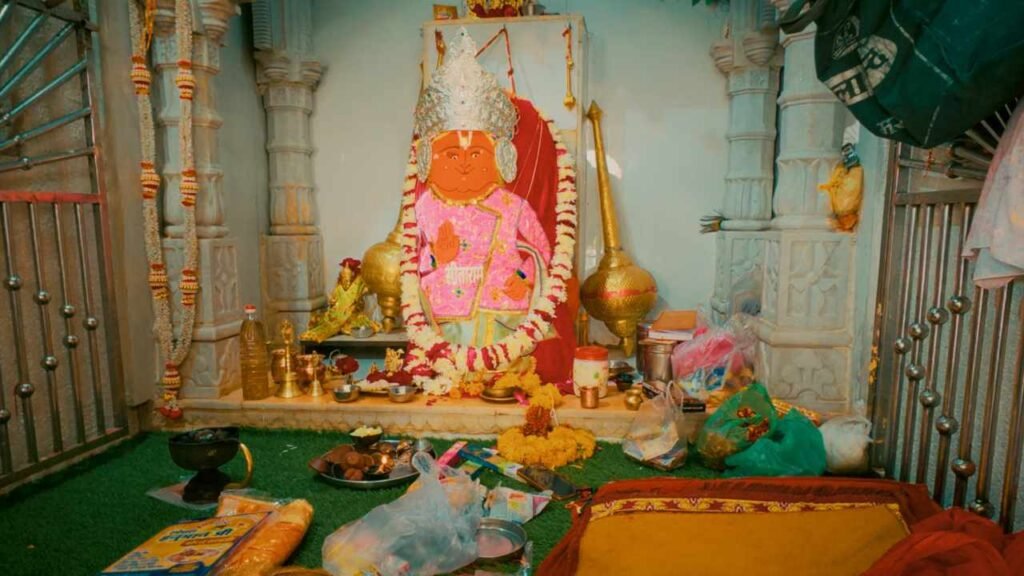
Just 1 km from Bolai station, right next to the Ratlam-Bhopal railway line, stands the Siddhveer Hanuman Temple. This place is easily accessible by road (28 km from Shajapur, 130 km from Indore) or by a short, thoughtful walk from the railway station.
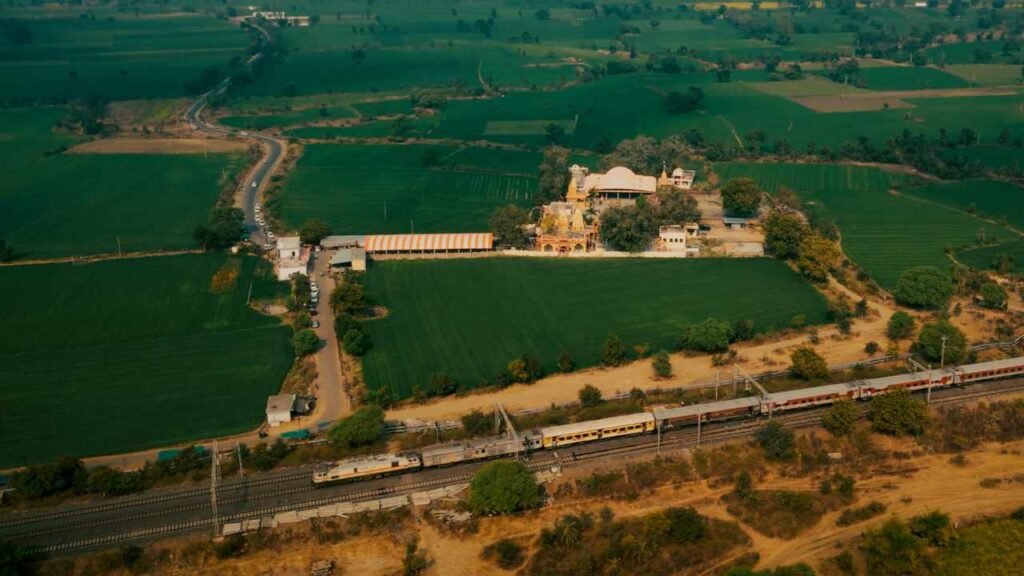
The moment you step into the place, the atmosphere clearly changes. This isn’t just a place of worship; it feels like a different energy zone. There’s a palpable vibration, a unique blend of faith, reverent peace, and the rhythmic sound of passing trains. The sound is a constant, resonant reminder of the temple’s unique story, blurring the line between God and modern railways. The proximity of the tracks near the temple is striking, reinforcing the idea that these two worlds, the divine and the supernatural, are intertwined here.
The Legend of Bolai Hanuman Temple & the Slowing Train
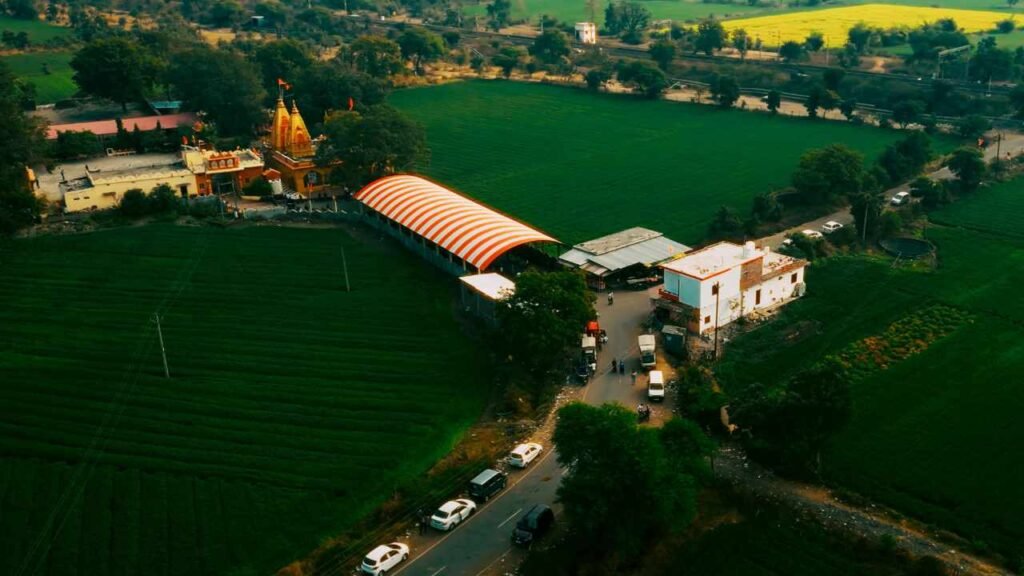
Built by Thakur Devi Singh Ji nearly 300 years ago, this temple has silently witnessed the changing times, from local kingdoms to colonial rule and independence. However, the story that put this temple on the world map is specifically linked to the British era of railways in India, a time when steam engines were at the forefront of technology.
Locals recount a story passed down through generations with unwavering conviction: a train driver, speeding through this section amid today’s speeds and tight schedules, felt a strange urge or heard a clear, commanding voice telling him to slow down. He ignored this divine feeling, dismissing it as a hallucination or simply fatigue. Shortly after he ignored the warning, the train tumbled onto the tracks ahead with a horrific crash. This wasn’t just a derailment; it was a tragic event that shook the entire area and stunned the engineers.
It is said that the driver himself, shaken to the core and miraculously surviving, later reported the incident. He admitted that he had ignored the warning, leading to the accident. From that day on, whenever a train passes near the Siddhavir Hanuman Temple, its speed is automatically reduced, or the driver voluntarily reduces the throttle to show respect.
You can watch the Bolai Village iconic cinematic Drone View here:
“Aadyant Prabhu”: A Rare Divine Union
The miracles here aren’t limited to trains. The idol housed in the sanctum sanctorum is a religious marvel in itself, attracting both scholars and devotees. When you look closely at the vermilion-covered idol, you’ll see Lord Hanuman and Lord Ganesha standing not separately, but as a combined force, merged into a single deity.
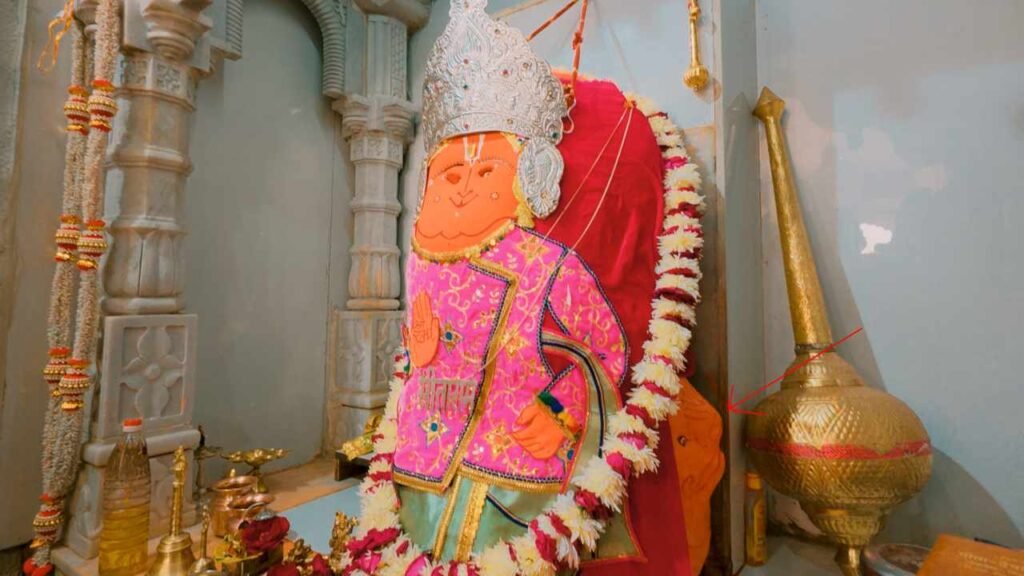
This form is known as “Adyant Prabhu” – a Sanskrit term meaning Lord of the beginning (Adi – Ganesha) and the end (Anta – Hanuman). This union represents the entire cycle of life, from the first step of any endeavor to its final culmination.
Significance: Worshiping this dual form is believed to bestow strength, wisdom, and protection, especially from the evil effects of Saturn (Saturn) and the other Navagraha (nine planets). In Indian astrology, Saturn is often feared for the troubles it brings, but both Ganesha and Hanuman are considered to be the antidote to these difficulties. Because Ganesha is the remover of obstacles and Hanuman embodies power and devotion (sankanta mochan), their combined form is considered very powerful, forming an impenetrable shield against all of life’s difficulties.
Rarity: To our knowledge, this iconographic form is very rare in Hindu temple architecture. There are only three such temples in the world:
- Siddhaveer Bolai Hanuman Temple (Bolai, MP)
- Jod Ganpati Hanuman Temple (Omkareshwar, MP)
- Madhya Kailash Temple (South Chennai)
The Fatherly Banyan Tree Behind Bolai Hanuman Temple
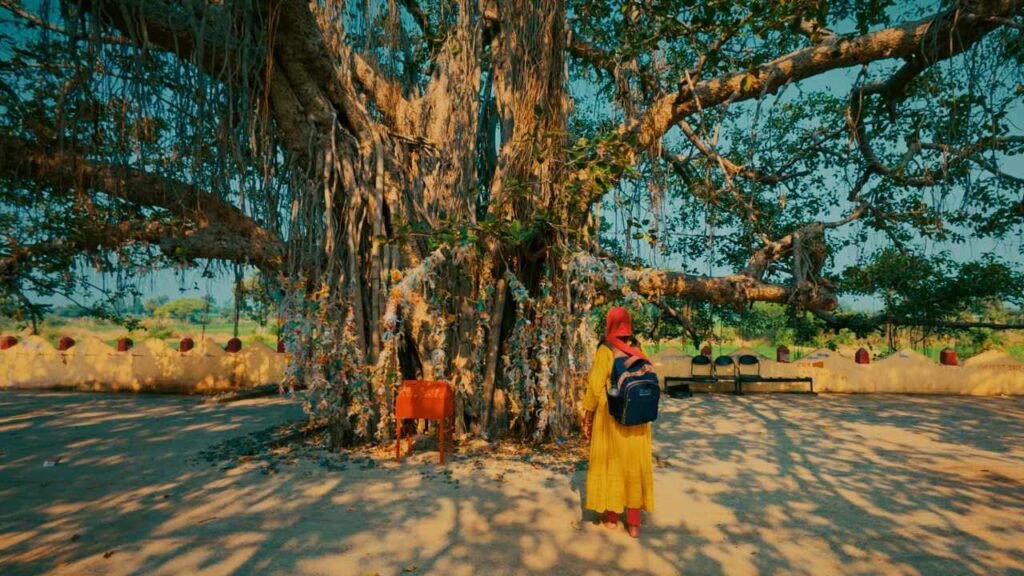
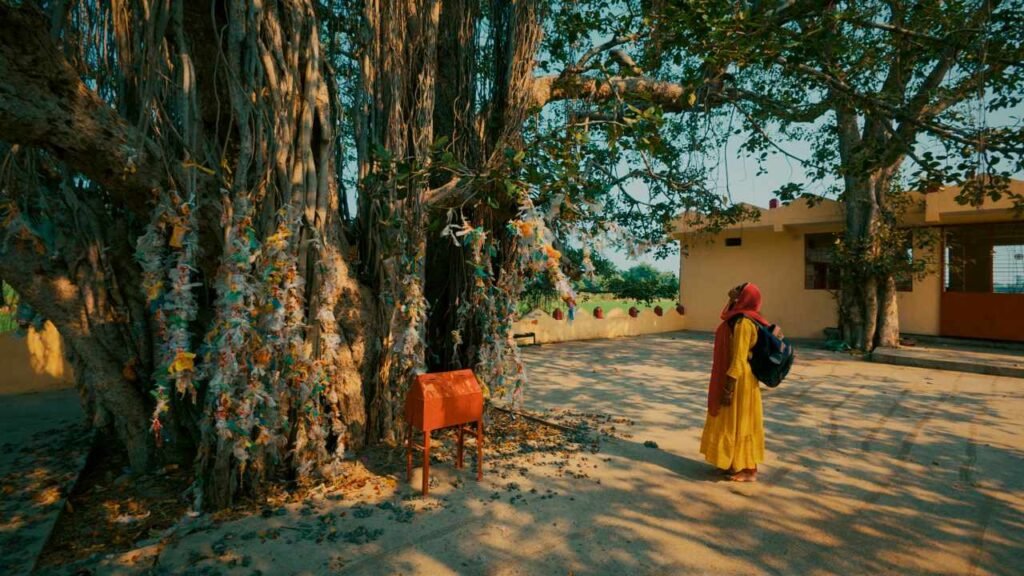
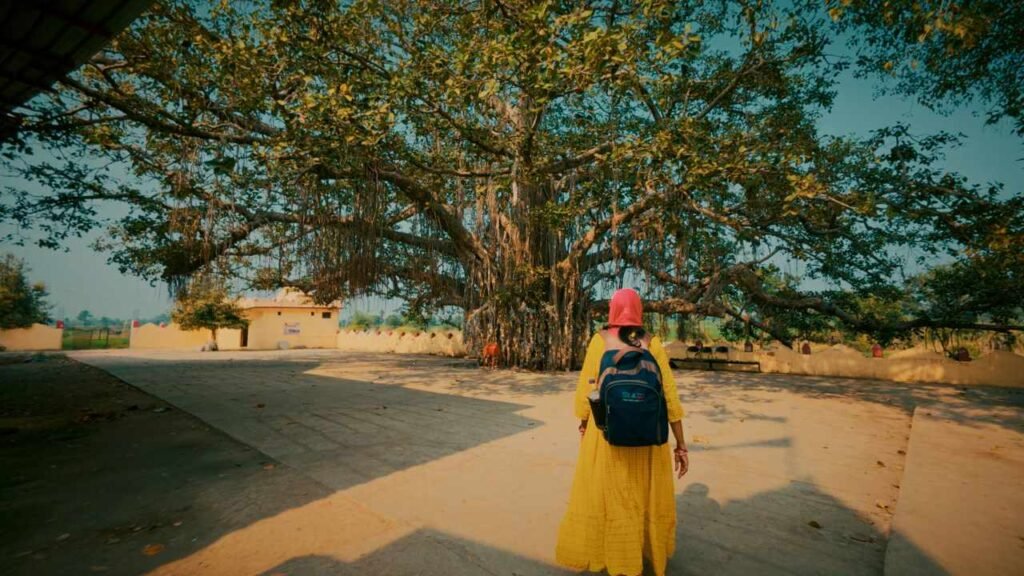
Behind the Bolai Hanuman Temple complex stands a huge, old banyan tree, its aerial roots touching the ground like pillars of time. Standing beneath its spreading canopy, I suddenly felt a deep emotion that’s hard to describe, but it’s felt everywhere. To me, the banyan tree is often likened to a father, patient, old, steady, and protective. Just as a father keeps his entire family under his shade, shielding them from the scorching sun and the troubles of life, this tree seemed to embrace devotees like a protective shield, shielding them from the harshness of the world.
Looking up, I saw hundreds of sacred threads (kalava) and brightly colored ribbons tied to its dangling roots and branches. Each thread represented a wish, a sorrow, a prayer for a child, or a story of gratitude that a “child” had shared with this “father.” This tree was a silent keeper of a thousand secrets and hopes, a living testimony to the faith of those who visited. We spent a lot of time here, simply soaking in the peace, feeling the wind rustle through the leaves, carrying the prayers of devotees to heaven. It was a moment of connection—not just with God, but also with the hopes and dreams of every person who had stood there before us.
You can watch the Bolai Hanuman Temple & Hatkeshwar Dham Semli Cinematic travel Film here:
After seeking blessings at the Bolai Hanuman Temple and witnessing its powerful, kinetic energy, we headed to our next destination: Hatkeshwar Dham in Semli.
Hatkeshwar Dham Semli: A Sanctuary of Peace
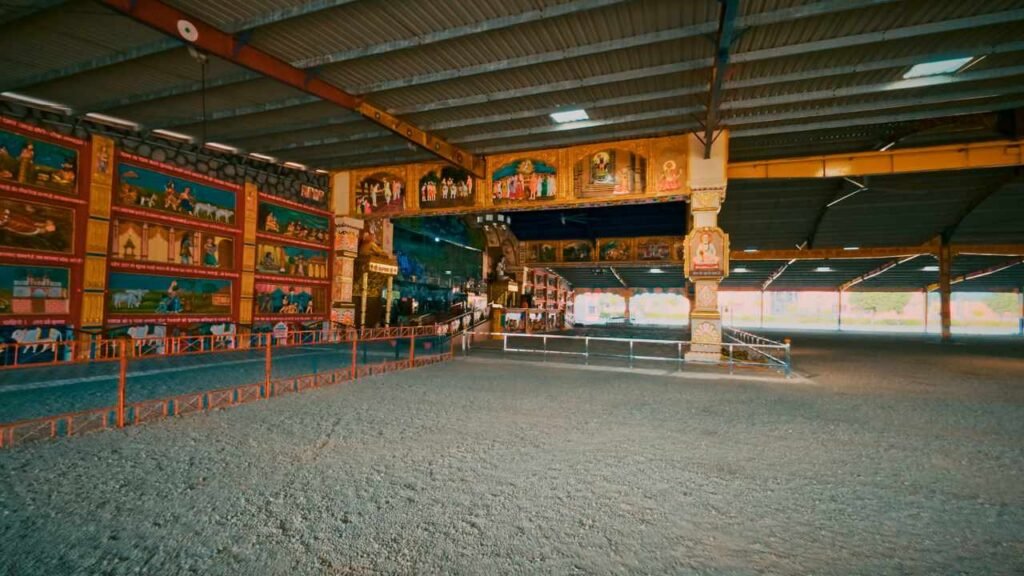
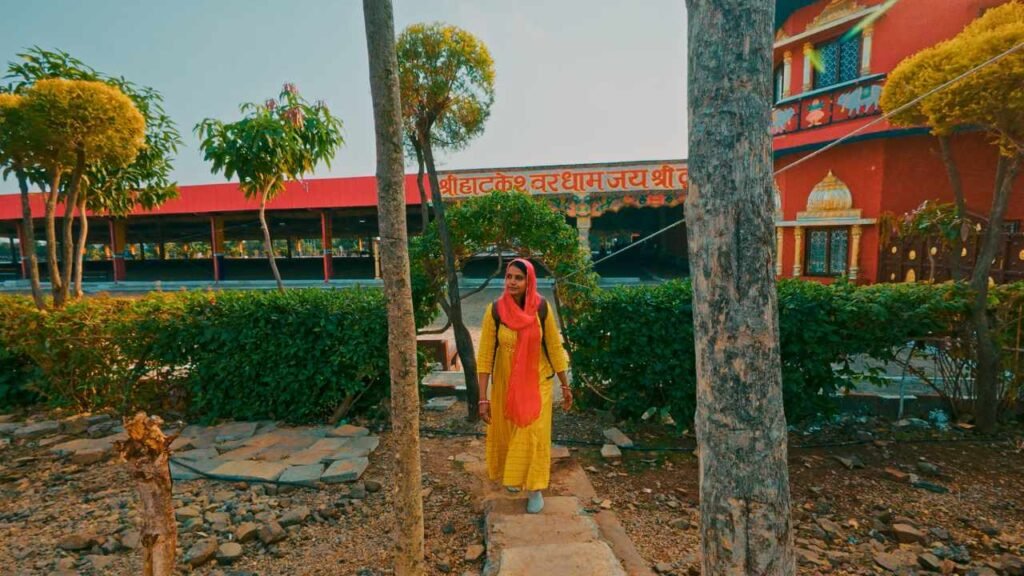
Hatkeshwar Dham is spread over a vast area, accessible through several large gates, though on this quiet day, we found only one gate open. As you enter the large courtyard, you notice something unique about the walls. They aren’t just painted with decorative designs or old stories; they’re inscribed with words of wisdom. Every wall, pillar, and corner is inscribed with poems, couplets, and, indirectly, life lessons that speak to moral principles and the right way to live.
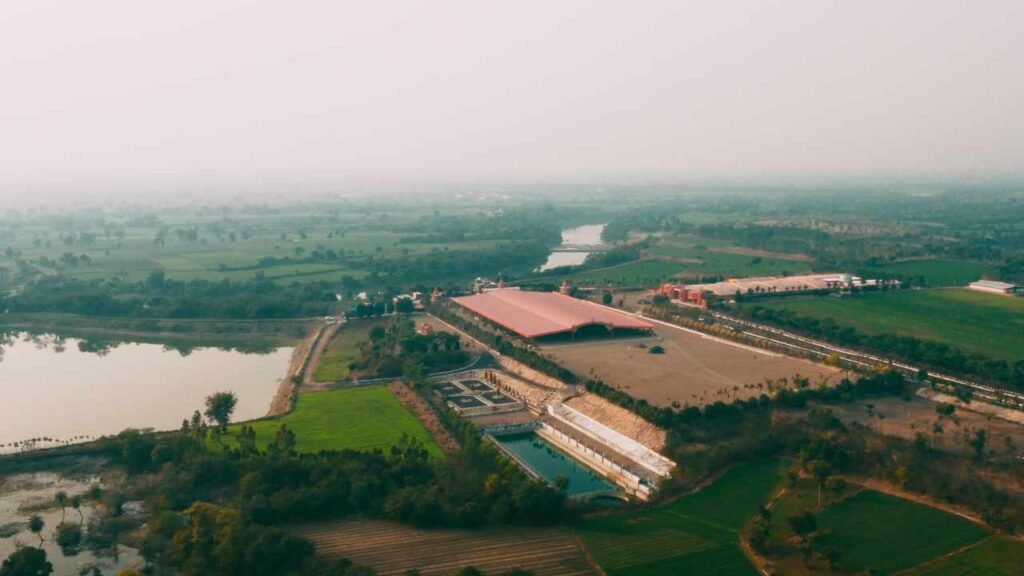
It feels as if the temple itself is speaking to you. When you walk through the temple, you’re not just walking around; you’re reading a guide to life. These writings explain how to be a better person, how to treat others well, the importance of truth, and what evils to avoid to follow the right path. This transforms a simple walk into a meditative study of the Dharma, forcing you to pause and reflect on your actions. You might stop to read a couplet about the importance of humility, and in that moment, the architecture acts as a guru.
Also Read: Sanka Shyam ji Temple: Narsinghgarh’s Tale of Love, Valor & Hidden Temples
The Divine Hatkeshwar Dham Complex
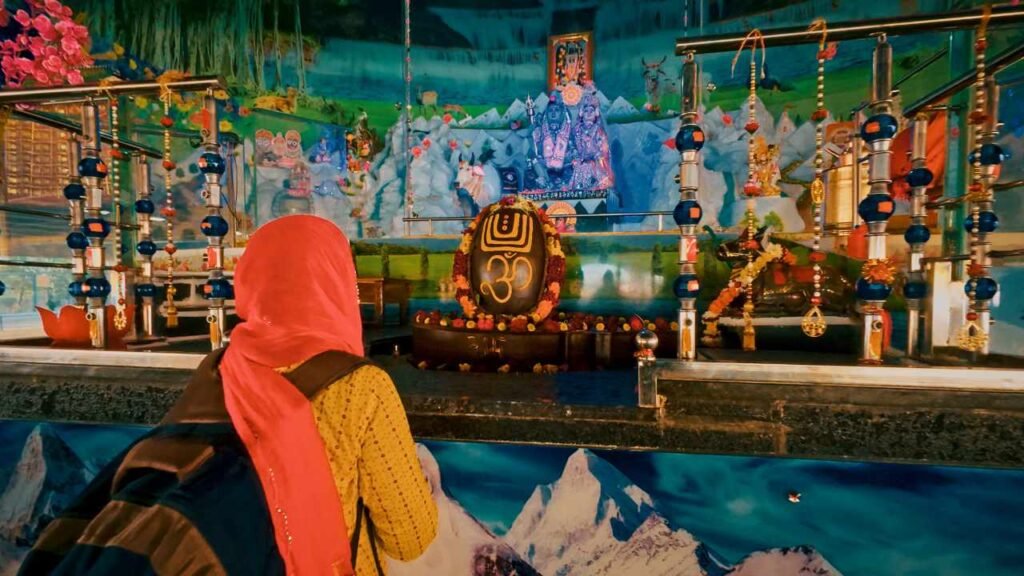
The temple houses magnificent statues of Lord Shiva and Goddess Parvati, centered around a sacred Shivalinga that draws your focus immediately. But the complex offers more than just the main shrine; it is a holistic ecosystem of spirituality designed to nourish the mind, body, and soul:
A Sacred Pond: A beautiful water body reflects the temple spires and adds to the cooling, peaceful vibe of the ashram. Sitting by its banks, with the gentle sound of water lapping against the stone steps, feels far removed from the stress and hustle of city life. It invites you to sit, breathe, and simply be.
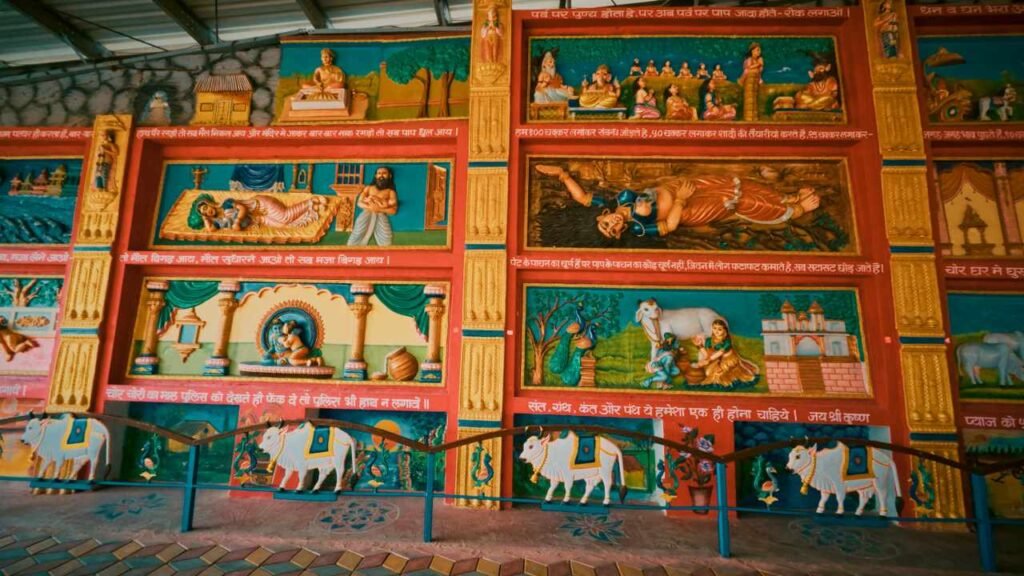
The Cowshed (Gaushala): We visited a massive hall dedicated to Gau Seva (service to cows), a central tenet of rural Indian spirituality. We estimated it could feed at least 100 cows at once. While most of the herd was out grazing in the forest during our visit, witnessing the staff diligently preparing the evening fodder was heartwarming. It highlighted the ashram’s commitment to selfless service (Seva) and compassion for all living beings. It serves as a reminder that spirituality is not just about prayer, but about caring for the voiceless.
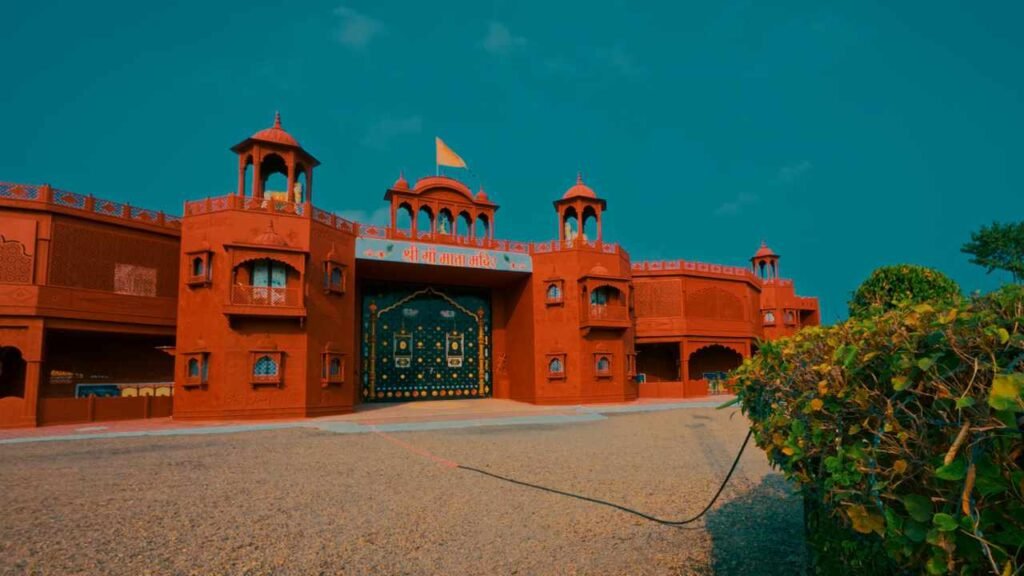
Tribute to Soldiers: In a touching blend of patriotism and spirituality, there is a dedicated space displaying artifacts and tributes honoring India’s armed forces. It serves as a poignant reminder that protecting the nation is also a form of divine duty, bridging the gap between the sacred and the civic. It honors the ‘Karma Yogis’ who lay down their lives for the peace we enjoy.

Traveler Tip: This location comes alive during the holy month of Sawan and especially on Guru Purnima, when thousands of devotees gather to listen to the soul-stirring sermons of Shri Kamal Kishore Ji. If you enjoy large spiritual gatherings and collective prayer, that is the ideal time to visit to witness the community fervor.
How to Reach Siddhaveer Hanuman Temple & Hatkeshwar Dham
Reaching these divine spots is relatively straightforward, offering a scenic drive through the heart of Madhya Pradesh, where the journey is as pleasant as the destination.
By Train:
The nearest stop is Bolai Station. The Siddhaveer Hanuman Temple is a convenient 1km walk from there, making it accessible even for those without personal vehicles or those wishing to arrive by the very railway line.
By Road:
- From Shajapur: 28 km
- From Bhopal: 120 km (approx. 2.5 – 3 hours via picturesque state highways lined with fields)
- From Indore: 130 km (approx. 3 hours)
Best Time to Visit
While the temple is open year-round, the spiritual energy is at its peak during specific festivals. However, the winter months (October to February) offer the most pleasant weather for exploring, as the scorching Madhya Pradesh heat gives way to cool breezes and mild sunshine.

Hanuman Jayanti: The Bolai Temple sees a massive influx of devotees celebrating the birth of Lord Hanuman, with vibrant processions, chanting, and prayers filling the air.
Guru Purnima & Sawan Month: These are the ideal times to experience the vibrant cultural and spiritual festivities at Hatkeshwar Dham, witnessing the community spirit of the region.
If you enjoyed this blog, please Like, Share, and Subscribe to the Sapna Sharma Films channel. We are exploring the unknown corners of India, one village at a time, bringing you stories that connect us all.
Jai Jai Shri Ram!
Tags: #SiddhaveerHanuman #BolaiTemple #MadhyaPradeshTourism #MiracleTemplesIndia #HatkeshwarDham #SapnaSharmaFilms #IndianRailwaysMystery